

From the first steam locomotives to today’s advanced freight rail network, discover how railroads helped build the United States—and how Greenbrier continues that legacy through modern railcar innovation.
In celebration of America’s 250th anniversary, it is worth reflecting on the infrastructure that helped shape the nation’s growth, expansion and economic strength. Few innovations have influenced the United States as profoundly as the railroad.
Long before the interstate highway system or commercial aviation, rail connected communities, fueled industrial expansion and transformed regional economies into a unified national marketplace.
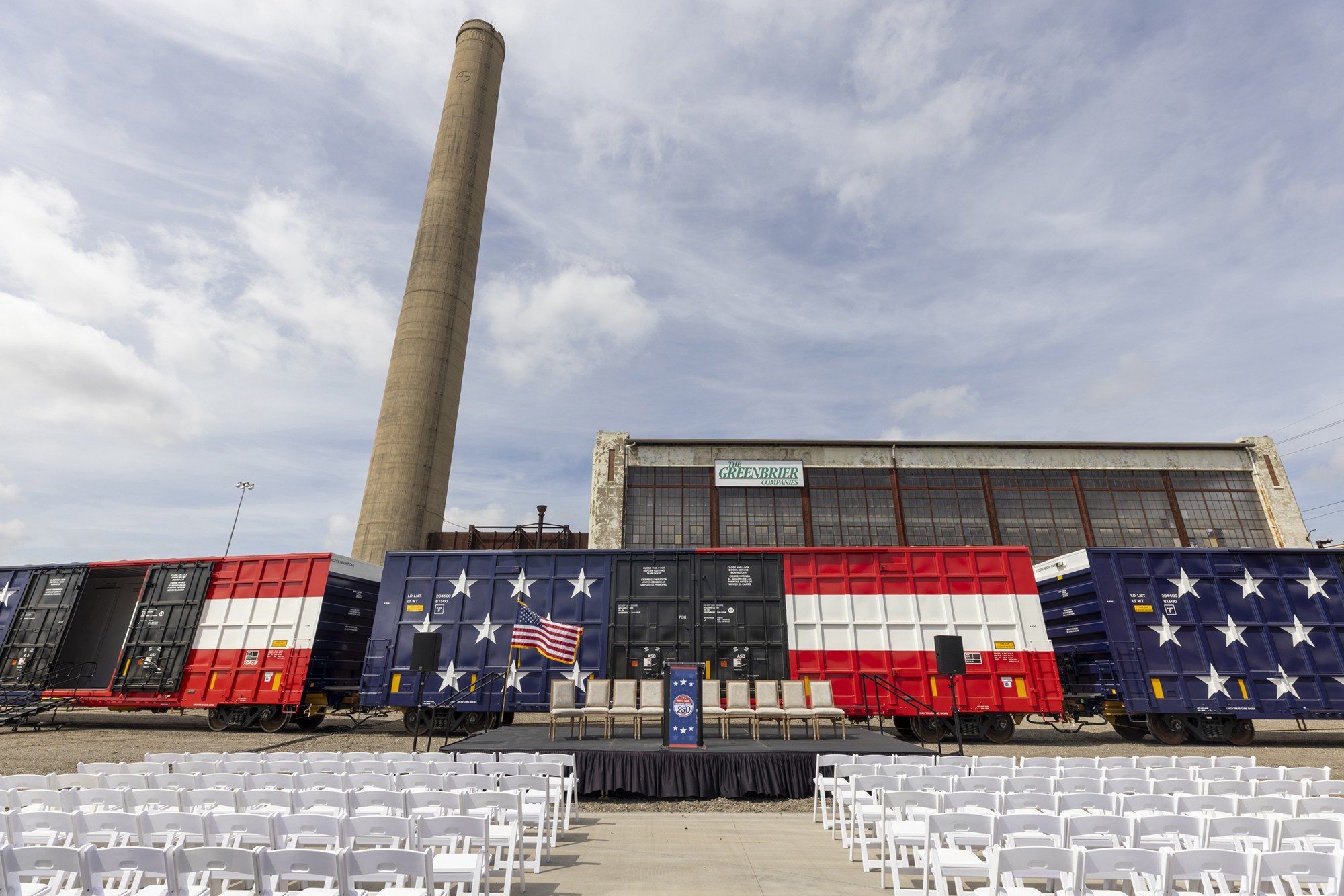
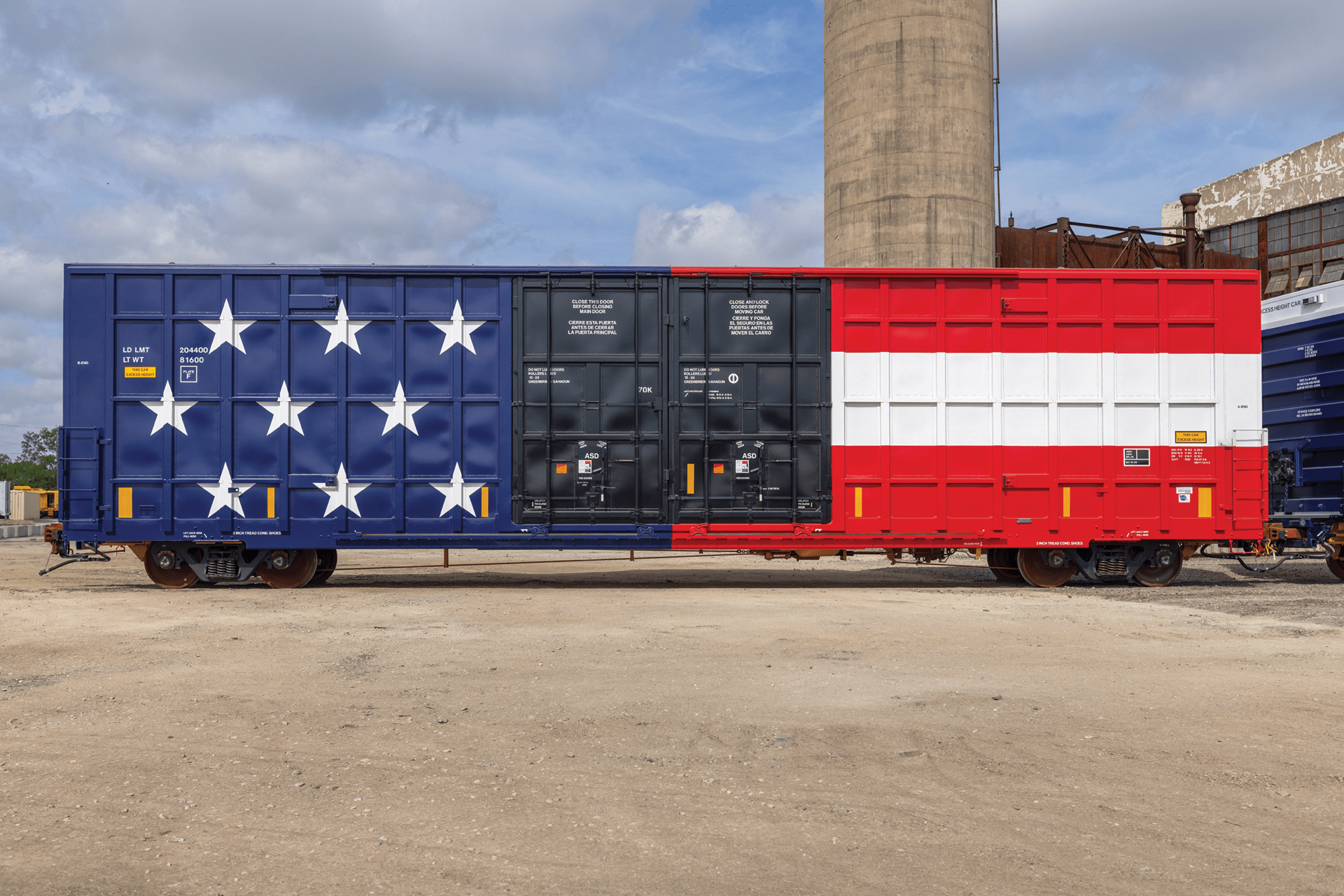
To commemorate America’s 250th anniversary, Greenbrier introduced specially designed America 250 celebration boxcars recognizing the railroad’s enduring role in the nation’s history.
As America expanded westward, the railroad made that growth possible at scale—a legacy that continues today through companies like Greenbrier, which designs, manufactures and maintains the railcars that move the essential commodities powering modern life.
Railroads Built the Nation
The story of American rail begins in the early 19th century during a period of rapid industrial experimentation. As the Industrial Revolution took hold, inventors and engineers began exploring new ways to move people and goods more efficiently than roads and canals could allow.
One of the earliest milestones came with the Baltimore and Ohio Railroad, chartered in 1827 as one of the first commercial railroads in the United States. Early demonstrations, including the famed Tom Thumb steam locomotive, showed the potential of rail travel—even reaching speeds near 20 mph, a remarkable achievement for its time.
By the 1840s and 1850s, rail mileage in the United States had tripled, signaling the beginning of a national transformation. Railroads quickly became the foundation of westward expansion, enabling settlers, goods and industry to move beyond the original 13 colonies into the growing frontier.
Railroads lowered transportation costs, carried significantly larger freight volumes, provided reliable year-round service despite seasonal conditions and dramatically reduced travel times over long distances.
Railroads Powered American Expansion and Industry
Following early expansion, railroads rapidly became the backbone of American economic development. In the mid-19th century, federal land grants accelerated railroad construction by providing millions of acres to rail companies willing to expand into undeveloped regions.
By 1860, major cities such as Chicago had become important rail hubs served by multiple lines, connecting agricultural regions with industrial centers and ports.
The Civil War further demonstrated the strategic importance of railroads, as trains became essential for moving troops, supplies and equipment at unprecedented speed.
After the war, construction resumed aggressively. The Pacific Railway Act of 1862 enabled the Union Pacific and Central Pacific railroads to build toward one another across the continent.
Their meeting at Promontory Summit, Utah, in 1869 marked one of the defining moments in American history. What once required months of travel by wagon or ship could now be accomplished in a matter of days.
By the late 1800s, multiple transcontinental railroads had been completed, linking coast to coast and establishing a national freight network that supported agriculture, mining, manufacturing and settlement.
The Golden Age of Railroading
By the late 19th and early 20th centuries, railroads had entered what is often referred to as the “Golden Age of Railroading.”
During this period, railroads became one of the most influential industries in the United States. Major rail companies ranked among the nation’s largest employers and investors, helping shape industrial development, commerce and trade.
Cities including Chicago, St. Louis and New York emerged as major rail hubs where agricultural production, manufacturing and raw materials converged into a unified national market. Railroads were no longer simply transportation systems—they had become the framework through which the American economy organized itself.
Rail Transformed What America Could Move
As rail technology evolved, so did the range of goods America could transport.
The development of the tank car during the mid-19th century transformed the movement of crude oil and chemicals by replacing wooden barrels with safer, more efficient bulk transportation. The innovation helped accelerate large-scale oil production, refining and nationwide distribution.
Soon after, refrigerated boxcars revolutionized the agricultural supply chain by allowing meat, dairy products and fresh produce to travel long distances without spoilage, creating the nation’s first truly national food distribution system.
As the industry continued to evolve, innovations such as intermodal freight further integrated rail into global supply chains by connecting railroads with ports, distribution centers and trucking networks.
Today, freight rail remains one of the foundational pieces of the U.S. economy, moving approximately 1.5 to 1.7 billion tons of freight annually and nearly 28% of all freight by ton-miles. From agricultural products and energy resources to construction materials and industrial chemicals, rail continues to transport the essential commodities that keep North America moving.
How Greenbrier Continues the Legacy
As America celebrates 250 years of progress, rail continues to serve as one of the nation’s most important supply chains.
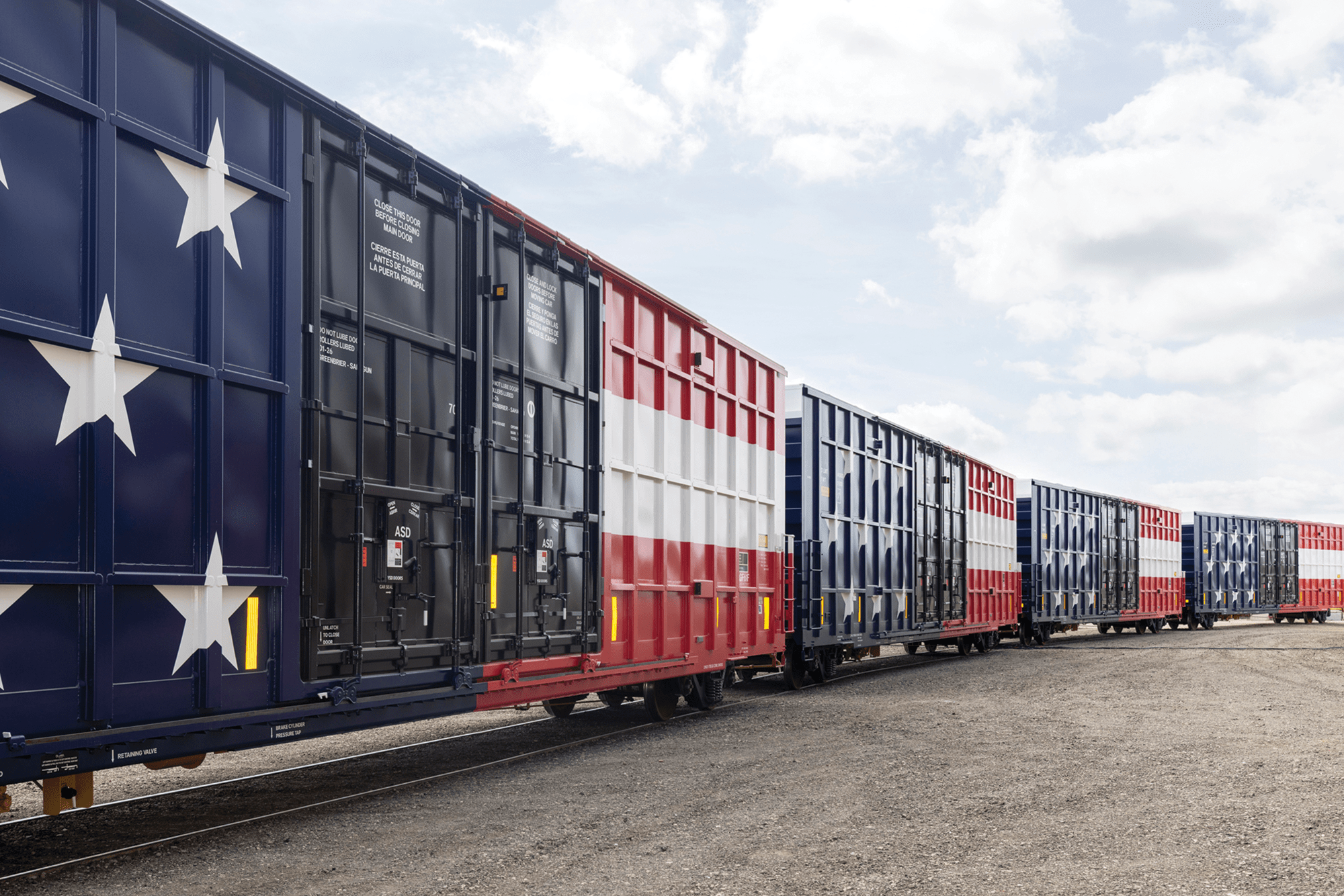
Greenbrier plays a direct role in that network, manufacturing the railcars that keep freight moving. From versatile gondolas and advanced automotive railcars such as the Multi-MaxPlus™ to a broad portfolio of railcars serving different markets, Greenbrier continues to develop equipment that helps customers move freight more efficiently, safely, sustainably and reliably.
Every mile of track, every railcar in motion and every shipment delivered carries forward a legacy that began nearly two centuries ago—supporting the industries that build, fuel and sustain the United States. At the center of that system, companies like Greenbrier help ensure that the next chapter of American growth continues.